


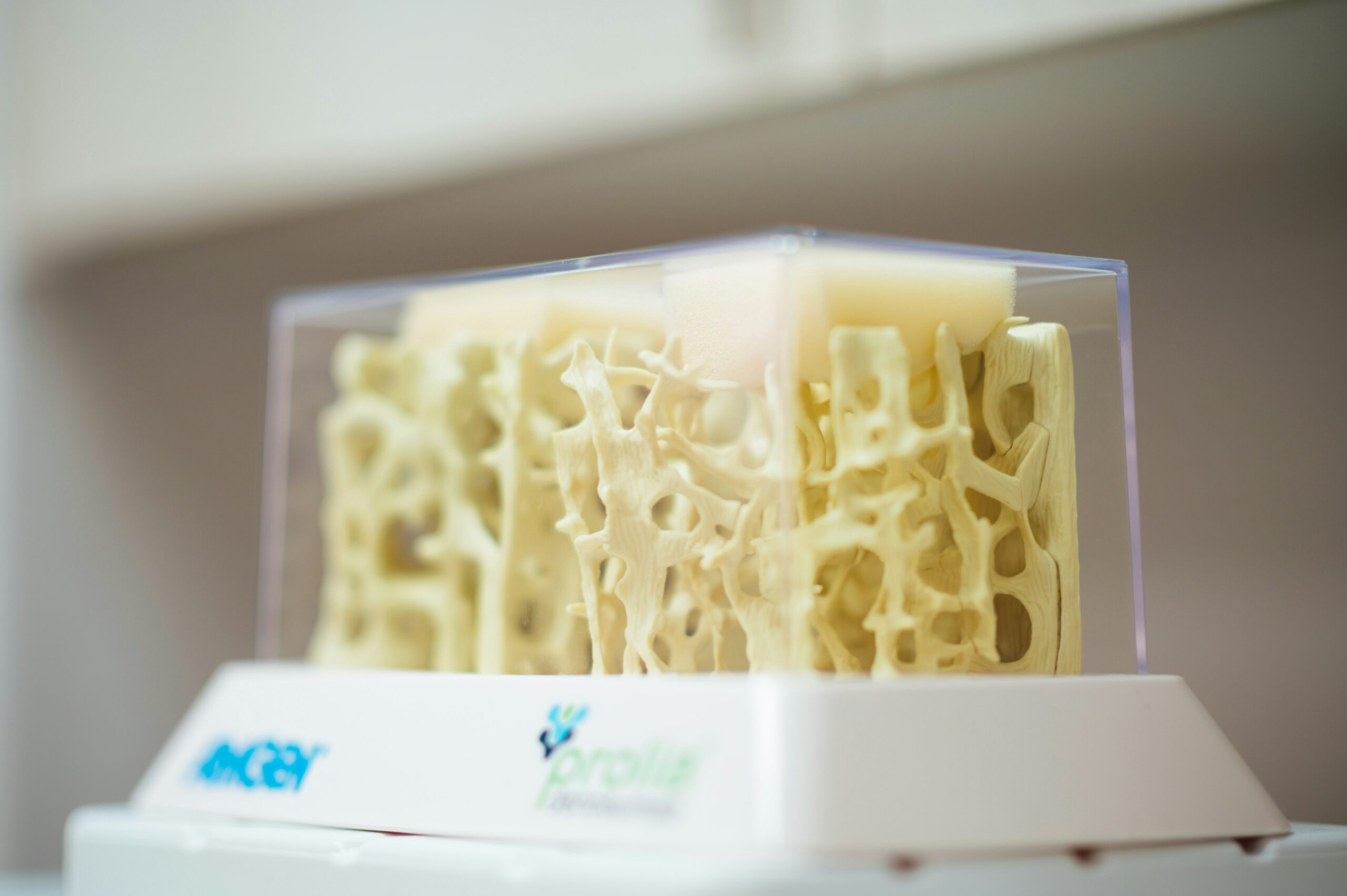
The world of regenerative medicine is currently undergoing a profound transformation as 3D bioprinting shifts from a science fiction concept into a tangible reality for personalized patient care. For decades, the primary challenge in transplant medicine has been the chronic shortage of donor organs and the ever-present risk of immune system rejection. Bioprinting addresses these issues by using a patient’s own cellular material to “print” functional biological structures, effectively creating a perfect genetic match.
This technology allows scientists to assemble complex tissue architectures layer by layer, mimicking the intricate microenvironments found in the human body. As we move closer to printing fully functional organs, we are seeing immediate applications in skin grafts, bone repair, and pharmaceutical testing.
For a hardware and performance specialist, the precision required in these machines—managing micrometer-level accuracy and delicate fluid dynamics—is a marvel of engineering. This guide will explore the systemic innovations, biological breakthroughs, and strategic frameworks that are making 3D bioprinting the cornerstone of future healthcare. We are witnessing a shift where medicine becomes less about managing disease and more about manufacturing the cure itself through customized biological solutions.
The Fundamental Mechanics of Bioprinting Technology

At its core, bioprinting is an additive manufacturing process that uses “bio-inks” instead of plastics or metals. These bio-inks are composed of living cells and supportive scaffolds that maintain structural integrity during the printing process.
A. Analyzing the role of extrusion-based bioprinting for high-viscosity materials.
B. Utilizing inkjet bioprinting for high-speed and high-resolution cell placement.
C. Investigating laser-assisted bioprinting for delicate cells sensitive to shear stress.
D. Assessing the importance of cross-linking methods to solidify the printed tissue.
E. Managing the temperature and pH levels within the print chamber to ensure cell viability.
F. Evaluating the role of stereolithography in creating complex vascular networks.
G. Analyzing the precision of robotic arms in maintaining anatomical accuracy.
H. Investigating the integration of “In-situ” bioprinting directly onto a patient’s wound.
The precision of the hardware determines the survival of the cells. If the pressure is too high, the cells perish; if it is too low, the structure collapses. Finding the “Goldilocks zone” of mechanical performance is the key to successful tissue fabrication.
Bio-Inks and the Extracellular Matrix
The “ink” used in these printers is a sophisticated cocktail of living cells and hydrogels. This material must be thin enough to flow through a nozzle but strong enough to support the weight of the developing tissue.
A. Analyzing the use of natural polymers like collagen and fibrin as bio-ink bases.
B. Utilizing synthetic hydrogels to provide customizable mechanical properties.
C. Investigating the role of “Decellularized Bone Matrix” in promoting bone growth.
D. Assessing the impact of growth factors within the bio-ink on cell differentiation.
E. Managing the viscosity of the ink to prevent clogging and cell damage.
F. Evaluating the biocompatibility of cross-linking agents like UV light or chemicals.
G. Analyzing the use of “Sacrificial Inks” to create hollow channels for blood flow.
H. Investigating the potential for self-assembling “Cell Spheroids” in scaffold-free printing.
Bio-inks provide the “scaffolding” or the house where the cells live. Without a proper extracellular matrix, the cells cannot communicate or organize into functional tissues. The development of advanced, “smart” bio-inks is one of the fastest-growing sectors in biotech.
Vascularization: The Greatest Engineering Hurdle
The biggest challenge in printing large organs is ensuring that every cell has access to oxygen and nutrients. Without a network of blood vessels (vascularization), the center of a printed tissue will quickly die.
A. Analyzing the use of co-axial extrusion to print hollow vascular tubes.
B. Utilizing “Sacrificial Templates” that melt away to leave behind open channels.
C. Investigating the role of endothelial cells in lining printed blood vessels.
D. Assessing the pressure requirements for pumping synthetic blood through micro-channels.
E. Managing the branching patterns of vessels to mimic natural artery structures.
F. Evaluating the integration of 3D-printed tissues with the host’s existing blood supply.
G. Analyzing the use of oxygen-releasing materials to keep cells alive during printing.
H. Investigating the role of computational fluid dynamics in designing vessel networks.
Vascularization is the difference between a thin layer of skin and a thick, functional heart muscle. Scientists are using mathematical algorithms to map out the most efficient paths for these digital veins. Once we master the “plumbing,” the dream of printing whole organs becomes a reality.
Clinical Applications in Skin and Bone Regeneration
Skin and bone are the most advanced areas of bioprinting today because they are relatively two-dimensional or structurally simple compared to organs like the liver.
A. Analyzing the use of bioprinting for treating deep-degree burn victims.
B. Utilizing customized bone scaffolds printed to fit a patient’s specific fracture.
C. Investigating the role of “Stem Cell” integration in promoting rapid tissue healing.
D. Assessing the reduction in scarring when using bioprinted skin grafts.
E. Managing the “In-situ” printing of skin directly onto chronic diabetic ulcers.
F. Evaluating the mechanical strength of bioprinted bone compared to traditional implants.
G. Analyzing the use of “Bio-active” ceramics in 3D-printed dental applications.
H. Investigating the potential for printing “Cartilage” for joint and knee repairs.
Skin bioprinting is already moving into clinical trials, offering hope to those with severe injuries. By using the patient’s own skin cells, the risk of rejection is zero. Bone bioprinting allows for “personalized implants” that match the patient’s anatomy perfectly.
Bioprinting for Drug Testing and Disease Modeling
Before a drug reaches human trials, it must be tested on biological tissues. Bioprinting allows pharmaceutical companies to create “Organs-on-a-Chip” that react exactly like human organs.
A. Analyzing the use of bioprinted liver tissues for toxicity testing.
B. Utilizing “Tumor Models” to test personalized cancer treatments.
C. Investigating the role of bioprinting in reducing the need for animal testing.
D. Assessing the accuracy of bioprinted “Lung Models” in studying viral infections.
E. Managing the high-throughput screening of thousands of drug compounds.
F. Evaluating the role of bioprinted “Heart Tissue” in testing for cardiac side effects.
G. Analyzing the potential for “Patient-Specific” drug testing for rare diseases.
H. Investigating the use of “Blood-Brain Barrier” models for neurological research.
This application is currently the most profitable part of the bioprinting industry. It allows drug developers to see how a human liver reacts to a chemical without ever endangering a person. It speeds up the “bench-to-bedside” timeline for new medications significantly.
The Role of AI and High-Performance Computing
The complexity of mapping out billions of cells in a three-dimensional space requires massive computational power. AI is used to design the blueprints that the bioprinter follows.
A. Utilizing machine learning to optimize the “G-Code” for cell placement.
B. Analyzing medical imaging (CT and MRI) to create 3D anatomical models.
C. Investigating the use of “Digital Twins” to simulate tissue growth over time.
D. Assessing the impact of AI in monitoring the quality of the print in real-time.
E. Managing the “Big Data” generated by high-resolution biological scans.
F. Evaluating the role of “Generative Design” in creating more efficient vascular paths.
G. Analyzing the performance of GPU-accelerated simulations for tissue dynamics.
H. Investigating the use of AI to predict the long-term stability of bioprinted organs.
AI is the “brain” behind the “hand” of the printer. It handles the trillions of calculations needed to ensure that the printed structure doesn’t collapse under its own weight. High-performance silicon is the essential backbone of this biological revolution.
Ethical Considerations and Regulatory Frameworks
As we gain the ability to “print life,” we must address the ethical and legal questions that come with it. Regulators are working to define how these living products should be classified.
A. Analyzing the “Somatic” vs “Germline” implications of modified bioprinted cells.
B. Utilizing strict “Quality Control” standards for clinical-grade bio-inks.
C. Investigating the potential for “Human Enhancement” through bioprinted parts.
D. Assessing the global consensus on the ownership of “Genetic Blueprints.”
E. Managing the “Informed Consent” for patients receiving experimental bio-implants.
F. Evaluating the role of the FDA and EMA in certifying bioprinting hardware.
G. Analyzing the equity of access to these expensive personalized therapies.
H. Investigating the future of “Intellectual Property” for bioprinted organ designs.
The ethics of bioprinting are as complex as the tissues themselves. Who owns the design of your new liver? Can we print organs that are better than the originals? These questions will define the legal landscape of the next century.
Future Outlook: Toward Whole Organ Printing
The ultimate goal of the industry is to print a fully functional human heart, kidney, or liver. While we aren’t there yet, the progress made in the last decade suggests it is only a matter of time.
A. Analyzing the transition from “Tissue Patches” to “Whole Organ” systems.
B. Utilizing “Bioreactors” to mature the printed organ before transplantation.
C. Investigating the role of “Multi-material” printers that can handle bone and muscle.
D. Assessing the benefits of “Bio-printing in Space” (Zero-G) for better structure.
E. Managing the logistics of a “Print-on-Demand” organ delivery system.
F. Evaluating the reduction in the global “Organ Black Market” via bioprinting.
G. Analyzing the impact of “Xenotransplantation” combined with bioprinting.
H. Investigating the potential for “Bio-hybrid” organs that use electronic sensors.
We are entering an era of “Cybernetic Biology” where our parts can be replaced as easily as a car component. This will extend human life expectancy by decades. The transition to whole organ printing will be the single greatest achievement in medical history.
Conclusion

3D bioprinting is the definitive future of personalized and regenerative medical care. The technology is moving from simple tissue patches toward the fabrication of complex organs. Living bio-inks and advanced hydrogels are the essential materials driving this biological revolution.
The challenge of vascularization remains the primary hurdle for printing large-scale structures. Skin and bone bioprinting are already providing life-changing results in clinical environments. Pharmaceutical companies are using bioprinted models to revolutionize the speed of drug testing. Artificial intelligence provides the necessary computational power to design complex biological blueprints. Hardware precision at the micrometer level is critical for the survival of the printed cells.
Ethical and regulatory frameworks must evolve to keep pace with these rapid technological gains. The shift toward “one-time cures” through bioprinting will reshape the global healthcare economy. We are moving toward a world where the organ donor waiting list becomes a thing of the past. Human longevity will be significantly extended as we master the art of biological manufacturing. Ultimately, bioprinting represents the ultimate synergy between engineering, computer science, and biology.