

Your team ran hundreds of experiments last quarter. The data lives in spreadsheets and old notebooks and a LIMS nobody likes to open. Finding one result from six months ago takes an afternoon.
Sound familiar? Many research labs still run on software built for a different era. AI-powered laboratory information management systems promise faster searches and fewer manual errors along with smarter predictions.
Yet vendor marketing often sounds the same while real capabilities differ a lot. Below you will learn what separates legacy LIMS from AI-driven platforms and how to evaluate your options.
You will also see which AI features actually matter and how to migrate without disrupting your research.
Understanding AI-Powered Laboratory Informatics
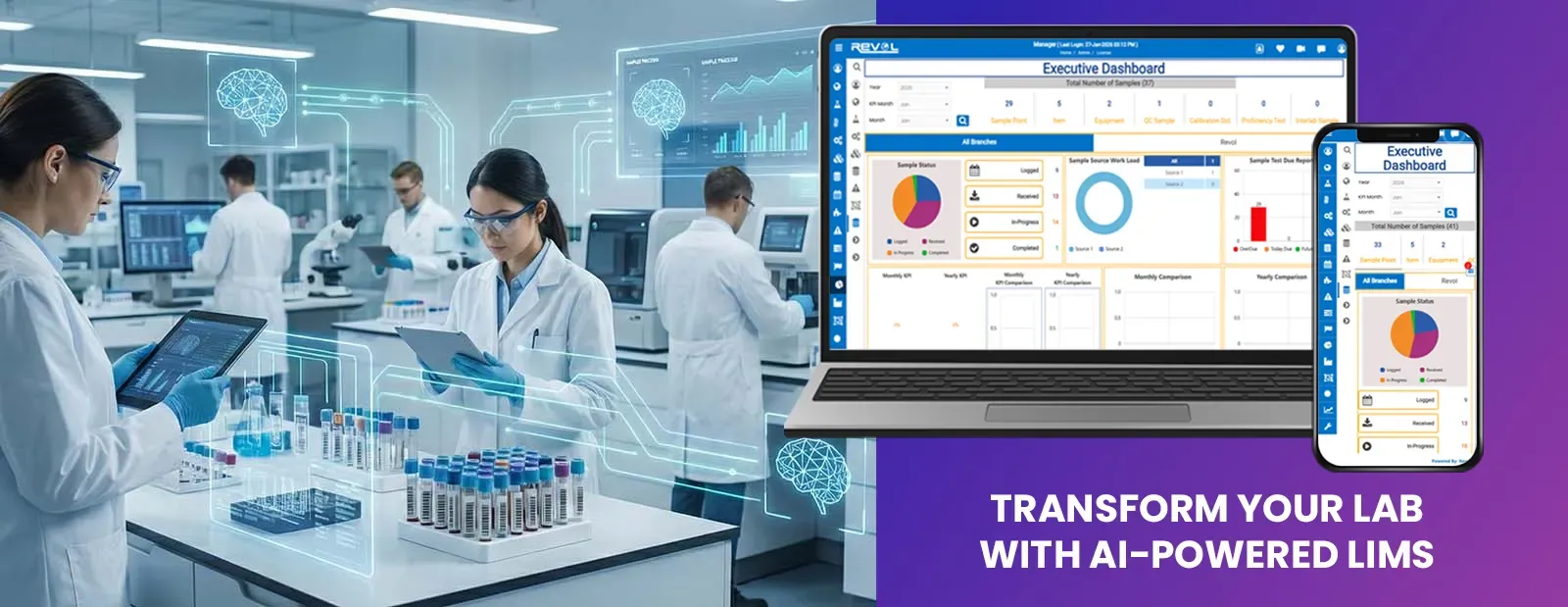
A traditional LIMS tracks samples and stores results. It manages workflows and creates audit trails. It does its job well but it mostly records what already happened.
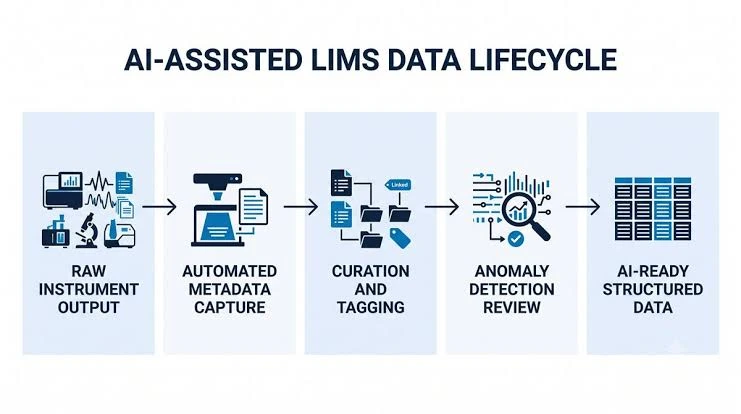
An AI-driven platform adds a layer of intelligence on top of that foundation. Lab Manager describes these systems as adding predictive and detective capabilities to standard sample and data management. Some are even moving toward autonomous actions.
| Aspect | Legacy LIMS | AI-Driven LIMS |
|---|---|---|
| Core role | Records samples and results | Records data and finds patterns in it |
| Data search | Fixed filters and complex queries | Natural language questions |
| Quality control | Fixed thresholds and manual review | Anomaly detection that learns normal behavior |
| Instrument upkeep | Scheduled maintenance by calendar | Predictive maintenance from instrument data |
| Workflow changes | Rule-based routing set by admins | Data-driven rerouting and suggestions |
| Deployment | Often on-premise with heavy customization | Often cloud-native and modular |
Lab Manager also offers a useful way to think about AI maturity. Software can describe what happened and diagnose why it happened.
More advanced tools predict what will happen next. The most advanced ones prescribe or take action on their own. Most platforms today reliably handle only the first two levels.
Key Evaluation Criteria for Research and Development Facilities
R&D labs have different needs from routine testing labs. Your experiments change often. Your data types vary from sequences and spectra to images and assay results. Your platform must handle that flexibility.
Start with data quality. AI output is only as good as the data underneath it. If your records are fragmented or inconsistent no model will save you. Ask vendors exactly what data each AI feature needs to work well.
Next look at integration. A strong platform should connect with your electronic lab notebook and instruments along with existing analytics tools. Many teams now prefer a unified system where ELN and LIMS share one data model.
Compliance matters too. AI does not reduce your regulatory obligations and may actually increase them.
Any AI action that touches sample records must appear in the audit trail with a timestamp and clear trigger. Vendor model updates may also need revalidation so agree on change control before you sign.
You also face a classic decision between building in-house or buying a commercial platform.
| Factor | Custom In-House Build | Commercial AI LIMS |
|---|---|---|
| Fit to workflows | Tailored exactly to your lab | Configurable but within vendor limits |
| Upfront cost | High development cost | Subscription or license fees |
| Time to launch | Months or years | Weeks to months |
| AI features | Built and trained by your own team | Ready-made and updated by the vendor |
| Maintenance | Your team owns every bug and update | Vendor handles updates and support |
| Validation | Fully on your team | Shared with vendor documentation |
Custom builds suit large organizations with strong informatics teams and unusual workflows. Most R&D labs will move faster with a commercial platform. Recent examples show how quickly vendors are adding AI.
LabVantage launched CORTEX in March 2026 as a cloud-native layer that brings AI agents and predictive maintenance into its LIMS. Other vendors such as LabKey and Sapio Sciences have also announced new AI capabilities.
Top Artificial Intelligence Features Transforming Modern Workflows
Focus on AI features that solve real daily problems.
Natural language search may be the biggest time saver. Scientists often need answers buried in complex databases. Without AI they wait for an informatics specialist or learn query syntax themselves.
With natural language search a researcher can simply type a question such as which batches failed stability testing last quarter. The system translates that into a database query and returns results in seconds.
Lab Manager notes a key warning though. These tools work best on clean structured data. Treat the language model as a query tool and not a source of truth.
Anomaly detection is another valuable feature. The system learns normal behavior for each instrument or analyst or reagent lot. It then flags slow drift that fixed thresholds might miss. You will need to tune it carefully to avoid alert fatigue.
Predictive maintenance is currently the most mature AI use case in labs. The software studies runtime and temperature drift along with pressure changes to forecast when an instrument needs service. Expect to need around 12 to 18 months of history for reliable predictions.
Predictive analytics for experiments can also help R&D teams. Models can flag batches drifting toward specification limits or forecast likely QC failures. These models need ongoing monitoring because accuracy fades as conditions change.
Agentic AI is the newest category. These tools can reassign samples or adjust run parameters within set limits. They are promising but still the least mature. Start them only in low-risk workflows and keep human review for any reportable result.
How to Implement and Migrate to a New Laboratory Platform
Switching your LIMS is a major project. Good planning protects your data and your research timeline. Use this risk-mitigation checklist as a guide.
- Audit and clean your existing data first.
- Map every current workflow and integration.
- Define success metrics before choosing a vendor.
- Test AI features on your own data, not demo data.
- Ask for references from labs already in production.
- Agree on validation and change control in writing.
- Run a pilot with one team before full rollout.
- Keep the old system read-only during the transition.
- Train users and assign internal champions.
- Review AI performance regularly after launch.
The first step matters most. Moving messy data into a new system only moves the mess. Take time to standardize sample names and units along with metadata before migration.
Finally write down how agentic or automated features will behave. Define their scope and override options as well as what happens when something goes wrong. Clear rules keep your lab in control.
Conclusion
The best AI LIMS software for R&D labs goes beyond storing samples and results. It adds natural language search and anomaly detection along with predictive maintenance and smarter analytics.
Strong platforms integrate with your electronic lab notebook and keep every AI action auditable for compliance. Most labs will benefit more from a commercial platform than a custom build.
Success still depends on clean data and careful testing on your own workflows. Plan your migration step by step and keep humans in the loop for critical decisions.
With the right approach AI can help your lab spend less time searching for data and more time making discoveries.(***)