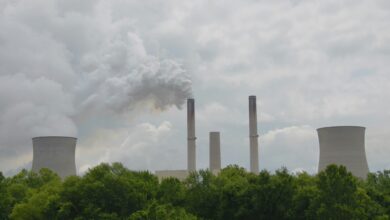
The global push toward digital transformation has inadvertently placed a massive strain on our planet’s energy resources and environmental health. As we become increasingly reliant on cloud computing, artificial intelligence, and massive data storage, the facilities housing these technologies are consuming electricity at an unprecedented rate.
Data centers are no longer just quiet warehouses for servers; they have become the beating, power-hungry hearts of the modern global economy. Decarbonizing these industrial giants requires far more than just buying carbon offsets or planting a few trees in remote locations. It demands a radical, systemic overhaul of how we design hardware, manage thermal loads, and integrate facilities into the local power grid.
Engineers and environmental scientists are now collaborating to find revolutionary ways to reduce the carbon footprint of digital infrastructure without sacrificing performance. We are witnessing a shift from “efficiency as an afterthought” to “sustainability as a core architectural requirement.” This deep dive will explore the cutting-edge strategies and systemic innovations that are turning the vision of a carbon-neutral digital world into a tangible reality.
The Shift Toward Circular Hardware Economy

Modern data centers often suffer from a “throwaway” culture where servers are replaced every few cycles to keep up with performance demands. Decarbonization starts with changing how we perceive the lifecycle of the silicon and steel inside these buildings.
A. Analyzing the carbon cost of manufacturing high-performance GPU and CPU units.
B. Utilizing modular server designs that allow for individual component upgrades.
C. Investigating the secondary market for refurbished enterprise-grade hardware.
D. Assessing the impact of precious metal recovery from decommissioned server racks.
E. Managing the supply chain to prioritize low-carbon materials for chassis construction.
F. Evaluating the role of hardware longevity in reducing “embodied carbon” metrics.
G. Analyzing the shift toward bio-based materials in data center cooling components.
H. Investigating the potential of 3D printing for on-site hardware part replacement.
By adopting a circular approach, we reduce the massive energy expenditure required to mine, refine, and ship new components. Every year a server stays in operation is a year where its manufacturing carbon footprint is further diluted across its productive life.
Revolutionary Cooling Technologies and Heat Reuse
Traditional air conditioning in data centers is incredibly wasteful, often consuming nearly as much power as the servers themselves. New systemic approaches focus on liquid cooling and capturing waste heat for community use.
A. Analyzing the efficiency gains of direct-to-chip liquid cooling systems.
B. Utilizing immersion cooling where servers are submerged in specialized dielectric fluids.
C. Investigating the integration of data centers into municipal district heating networks.
D. Assessing the role of rear-door heat exchangers in high-density rack environments.
E. Managing the moisture levels and thermal stability of liquid-cooled facilities.
F. Evaluating the potential of “free cooling” using ambient air in colder climates.
G. Analyzing the use of phase-change materials to store thermal energy temporarily.
H. Investigating the reduction of water consumption in evaporative cooling towers.
Capturing waste heat turns a byproduct into a resource. Instead of venting heat into the atmosphere, data centers can provide hot water for local homes or thermal energy for industrial greenhouses.
Grid-Interactive Data Centers and Renewable Integration
Data centers can no longer be passive consumers of energy; they must become active participants in the stabilization of the renewable energy grid. This involves using massive battery arrays to balance local power demand.
A. Utilizing on-site Battery Energy Storage Systems (BESS) for grid frequency regulation.
B. Analyzing the impact of “load shifting” where non-critical tasks run during solar peaks.
C. Investigating the use of green hydrogen fuel cells for backup power generation.
D. Assessing the benefits of long-term Power Purchase Agreements (PPAs) with wind farms.
E. Managing the transition away from diesel generators for emergency backup.
F. Evaluating the role of microgrids in ensuring data center energy independence.
G. Analyzing the potential of “software-defined power” to optimize energy distribution.
H. Investigating the use of tidal and geothermal energy for coastal data facilities.
When a data center can store excess renewable energy and feed it back to the grid during shortages, it becomes a pillar of community resilience. This systemic integration helps accelerate the transition to a carbon-free power sector.
AI-Driven Energy Orchestration
Artificial Intelligence is being used to manage the incredible complexity of data center operations. These systems can predict thermal spikes and adjust cooling in real-time with more precision than any human operator.
A. Utilizing neural networks to predict server load and optimize power delivery.
B. Analyzing the reduction in Power Usage Effectiveness (PUE) through AI monitoring.
C. Investigating the role of machine learning in preventing equipment overheating.
D. Assessing the impact of automated “ghost server” detection and shutdown.
E. Managing the cooling valves and fan speeds through real-time algorithmic control.
F. Evaluating the accuracy of AI-driven weather forecasting for “free cooling” windows.
G. Analyzing the use of digital twins to simulate energy-saving hardware configurations.
H. Investigating the role of AI in optimizing the carbon intensity of global data routing.
AI allows us to squeeze every bit of efficiency out of existing infrastructure. By automating the mechanical systems, we ensure that not a single watt of green energy is wasted on unnecessary cooling.
The Role of High-Performance Silicon Efficiency
As a hardware analyst, she knows that the efficiency of the chip itself is the most important factor in the energy equation. Designing chips that deliver more “compute per watt” is the holy grail of sustainable hardware.
A. Analyzing the transition to 3nm and 2nm process nodes for better power efficiency.
B. Utilizing ARM-based architectures for high-efficiency enterprise workloads.
C. Investigating the role of specialized AI accelerators in reducing general CPU load.
D. Assessing the benefits of “chiplet” designs in optimizing power delivery.
E. Managing the thermal throttling logic to maintain efficiency under heavy loads.
F. Evaluating the impact of wide-bandgap semiconductors like Gallium Nitride (GaN).
G. Analyzing the reduction in data movement energy through near-memory computing.
H. Investigating the potential of optical interconnects to reduce electrical resistance.
Smaller, more efficient transistors mean less heat is generated in the first place. This systemic improvement at the atomic level has a massive ripple effect on the cooling and power requirements of the entire facility.
Decarbonizing the Construction and Building Materials
The building that houses the servers also contributes to the carbon footprint. Systemic innovation extends to the concrete, steel, and glass used to build these digital cathedrals.
A. Utilizing “green concrete” that absorbs carbon dioxide during its curing process.
B. Analyzing the use of mass timber for data center structural frames.
C. Investigating the role of recycled steel in reducing the initial carbon debt of a site.
D. Assessing the benefits of “living roofs” for natural insulation and biodiversity.
E. Managing the site selection to minimize the impact on local ecosystems.
F. Evaluating the role of modular construction in reducing on-site waste.
G. Analyzing the efficiency of high-performance glass for natural lighting in offices.
H. Investigating the use of low-carbon insulation materials for thermal retention.
Low-carbon construction ensures that the facility doesn’t start its life with a massive “carbon debt.” Choosing sustainable materials is a long-term investment in the environmental integrity of the project.
Software Optimization for Sustainable Computing
Inefficient code is a major cause of energy waste. Decarbonization also requires a shift in how software is written, encouraging “green coding” practices that use fewer computational cycles.
A. Utilizing “Carbon-Aware” scheduling to run heavy tasks in regions with green grids.
B. Analyzing the energy impact of different programming languages on server load.
C. Investigating the role of code minification and optimization in reducing CPU usage.
D. Assessing the benefits of serverless architectures in maximizing hardware utilization.
E. Managing the data lifecycle to delete “dark data” that serves no purpose.
F. Evaluating the impact of efficient data compression on storage energy needs.
G. Analyzing the use of “Green Software” certifications for enterprise applications.
H. Investigating the potential of blockchain-light protocols for low-energy verification.
Clean code is green code. By reducing the complexity of software, we directly reduce the number of electrons that need to move through the silicon. This systemic change requires a cultural shift among developers worldwide.
Global Policy and Standardization for Green Data
To achieve global decarbonization, we need standardized metrics that go beyond simple Power Usage Effectiveness (PUE). We need to measure carbon intensity and water usage with the same rigor.
A. Analyzing the shift toward “Carbon Usage Effectiveness” (CUE) as a primary metric.
B. Utilizing “Water Usage Effectiveness” (WUE) to protect local water tables.
C. Investigating the role of government incentives for carbon-neutral data centers.
D. Assessing the impact of “Energy Star” ratings for enterprise hardware.
E. Managing the transparency of carbon reporting for cloud service providers.
F. Evaluating the role of international standards (like ISO 50001) in green operations.
G. Analyzing the impact of “Right to Repair” laws on enterprise hardware longevity.
H. Investigating the potential for a “Global Green Data” certification.
Standardization allows customers to choose providers based on their actual environmental performance. It forces the entire industry to compete on sustainability, driving innovation across the board.
Sustainable Connectivity and Network Infrastructure
The fiber optic cables and routers that connect data centers also consume energy. Decarbonizing the digital world requires looking at the “pipes” as well as the “taps.”
A. Utilizing low-power laser technologies for fiber optic data transmission.
B. Analyzing the energy efficiency of next-generation 6G network nodes.
C. Investigating the role of “Passive Optical Networks” in reducing active hardware.
D. Assessing the impact of localized “Edge Data Centers” on network energy use.
E. Managing the transition to renewable-powered telecommunications towers.
F. Evaluating the role of AI in optimizing data routing for the shortest physical path.
G. Analyzing the potential of satellite-based “Green Mesh” networks.
H. Investigating the reduction of “Idle Power” in network switches and routers.
By making the network more efficient, we reduce the total energy cost of every byte transmitted. This systemic approach ensures that the entire internet becomes a more sustainable ecosystem.
Conclusion

The systemic decarbonization of data centers is an essential requirement for our sustainable digital future. This journey begins with a complete re-evaluation of how we manufacture and manage our high-performance hardware. Circular economy principles must be applied to ensure that no piece of silicon goes to waste before its time. Liquid cooling and heat reuse are turning environmental liabilities into valuable community resources for local residents. Data centers are evolving from passive consumers into active stabilizers for our increasingly renewable power grids. Artificial intelligence is the secret weapon that allows us to optimize every watt of energy with surgical precision.
Hardware efficiency at the chip level remains the most powerful lever we have for reducing total electricity demand. Green construction and sustainable building materials ensure that our infrastructure has a clean start from day one. Software developers play a critical role by writing lean code that minimizes the computational burden on servers.
Global standards and transparent reporting are forcing the industry to compete for the title of the greenest provider. Network infrastructure must be optimized to ensure that data transmission doesn’t negate the gains made at the facility level. The upcoming decade will be defined by our ability to decouple digital growth from environmental degradation. Ultimately, systemic innovation is the only path toward a truly carbon-neutral and prosperous digital civilization.